INDIAN ADMINISTRATIVE SERVICE

Civil Services Examination (India)

From Wikipedia, the free encyclopedia

Jump to navigationJump to search

The Civil Services Examination (CSE) is a nationwide competitive examination in India conducted by the Union Public Service Commission for recruitment to various Civil Services of the Government of India, including the Indian Administrative Service (IAS), Indian Foreign Service (IFS), Indian Police Service (IPS) among others. Also simply referred as UPSC examination[1]. It is conducted in three phases – a preliminary examination consisting of two objective-type papers (General Studies Paper I and General Studies Paper II also popularly known as Civil Service Aptitude Test or CSAT), and a main examination consisting of nine papers of conventional (essay) type, in which two papers are qualifying and only marks of seven paper are counted followed by a personality test (interview).[1]

Process[edit]

The Civil Services Examination is based on the British Raj Era Imperial Civil Service tests, as well as the civil service tests conducted by old Indian empires such as in the Mauryan Empire and Mughal Empire. The Civil Services Examination is considered to be one of the most difficult competitive examination in India. On an average, 900,000 to 1,000,000 candidates apply every year and the number of candidates appearing to sit in the preliminary examination is approximately 500,000.[2] The examination consists of the following stage. Results are published in mid-August.

  • Stage I: Main examination – Held in October every year.
  • Stage II: Personality Test (interview) – held in March each year. Final results are usually announced in May .

The training program for the selected candidates usually commences the following September.

Eligibility[edit]

Eligibility for the examination is as follows:[1]

Nationality[edit]

TECHNOLOGY

Technology (“science of craft”, from Greek τέχνηtechne, “art, skill, cunning of hand”; and -λογία-logia[2]) is the collection of techniquesskillsmethods, and processes used in the production of goods or services or in the accomplishment of objectives, such as scientific investigation. Technology can be the knowledge of techniques, processes, and the like, or it can be embedded in machines to allow for operation without detailed knowledge of their workings. Systems (e. g. machines) applying technology by taking an input, changing it according to the system’s use, and then producing an outcome are referred to as technology systems or technological systems.

The simplest form of technology is the development and use of basic tools. The prehistoric discovery of how to control fire and the later Neolithic Revolution increased the available sources of food, and the invention of the wheel helped humans to travel in and control their environment. Developments in historic times, including the printing press, the telephone, and the Internet, have lessened physical barriers to communication and allowed humans to interact freely on a global scale.

Technology has many effects. It has helped develop more advanced economies (including today’s global economy) and has allowed the rise of a leisure class. Many technological processes produce unwanted by-products known as pollution and deplete natural resources to the detriment of Earth’s environment. Innovations have always influenced the values of a society and raised new questions of the ethics of technology. Examples include the rise of the notion of efficiency in terms of human productivity, and the challenges of bioethics.

Philosophical debates have arisen over the use of technology, with disagreements over whether technology improves the human condition or worsens it. Neo-Luddismanarcho-primitivism, and similar reactionary movements criticize the pervasiveness of technology, arguing that it harms the environment and alienates people; proponents of ideologies such as transhumanism and techno-progressivism view continued technological progress as beneficial to society and the human condition.

ACADEMIC WORLD SCHOOL

BEMETARA

Introduction of the School 
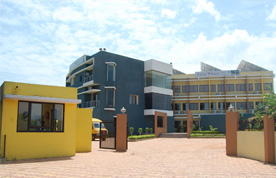
Academic World School is the result of innovative & meticulous planning to give a world-class education to the students living in Chhattisgarh & other states of India. It is truly an acid test to transform the students up to International level. In order to achieve this, we have given world-class infrastructure, experienced teaching faculty selected nationwide & well designed curriculum to cater to the need of the students. Because of its quality education & one of the best infrastructure the school has reached at the peak of success in just 5 years since its establishment in 2011. The school’s infrastructure is designed in such a manner that it gives an intrinsic sense of pleasure & exhilaration to the buddy students to bring up overall development of their personality. In such a short span of 5 years we are on the way to cross 2000 mark in terms of student’s strength. The Vakrangee Foundation is the benchmark team of management & other social workers who are striving very hard to take the school to greater heights of success & achievements. One of the key features in making our students reach the pinnacle of glory & success is the opportunity bestowed upon them to explore the world through ‘Global Excursion Trip’ every year.


A student learns so many things which are related to studies , morality, religion. nationalism and so on by doing or participating in different types of activity. This always helps in the proper physical, mental and spiritual growth and development of the child. Hence, at school, we organize so many activities for the small children and also for the children of higher classes, which are related to different types of characteristics and skills, We organize these activities like Birthday Celebration, Animal Day Celebration, Flower Day Celebration, Friendship Day Celebration and Grand Parent’s Day Celebration of all the spiritual festivals with beautiful customs and traditions. Regular visit to important & historical places as well as visits to Temples, Gurudwara, Post Office, Bank etc.

ACADEMIC FACILITIES

Classrooms

AWS, Bemetara emphasize on energetic learning spaces designed to support the physical, social, mental, emotional and academic growth of children. Each classroom combines the best of available indoor and outdoor areas to maximize learning.Students are given ample time and platform to nurture their learning skills.For this we have separate learning tools for Audio-visual,Kinaesthetic and tactile learners.Considering each and every student as a special gift of God to us, we affirm desire to equip, develop and refine them into an exemplary and worthy student in our Institution and this can be only fulfilled by positive and irrepressible educative efforts.

In Academic World we always try to sharpen the child’s brain with theoretical as well as practical knowledge. Our state of the art and fully functional advanced laboratories give every child a scientific outlook and encourage them to discover their concealed talents. We encompass dynamism in every child to translate his/her thoughts into theories, imaginations to reality and aspirations into accomplishments. Our team of best faculties support them in projecting their potentialities in every field Consequently it’s unquestionable matter that we make pupils with integrated personality & we are determined for the overall growth of a child.